
Today’s compact electronic devices were the stuff of science fiction not so long ago. Now they’re commonplace. Miniaturisation brings many benefits, not least the capability to add more processing power, features and functions to devices without a corresponding increase in size or weight.
Smaller devices can be portable, wearable or even implanted. They consume less power to extend battery life and offer new opportunities to innovative product designers.
What does the future look like and are there practical limits to how small electronic devices can become?
Has Moore’s Law Reached The Limit?
Way back in 1965 Gordon Moore made the famous observation that the number of components on a microchip would double every two years. But even Moore’s Law recognises that the ultimate limit to the size of components is theoretically governed by the physical space between atoms.
The theoretical limit to the size of silicon-based transistors will probably be reached during this decade. Even today, they’re down to about 70 atoms wide. Perhaps the benefits of ever smaller chips won’t be worth the cost and complexity of making them.
Practical Challenges
As components shrink, it becomes increasingly challenging to manage heat dissipation, maintain signal integrity, and ensure reliable operation.
However small individual components become, they still need to be assembled with other components to make usable devices. And smaller components are harder to handle and position with the precision needed.
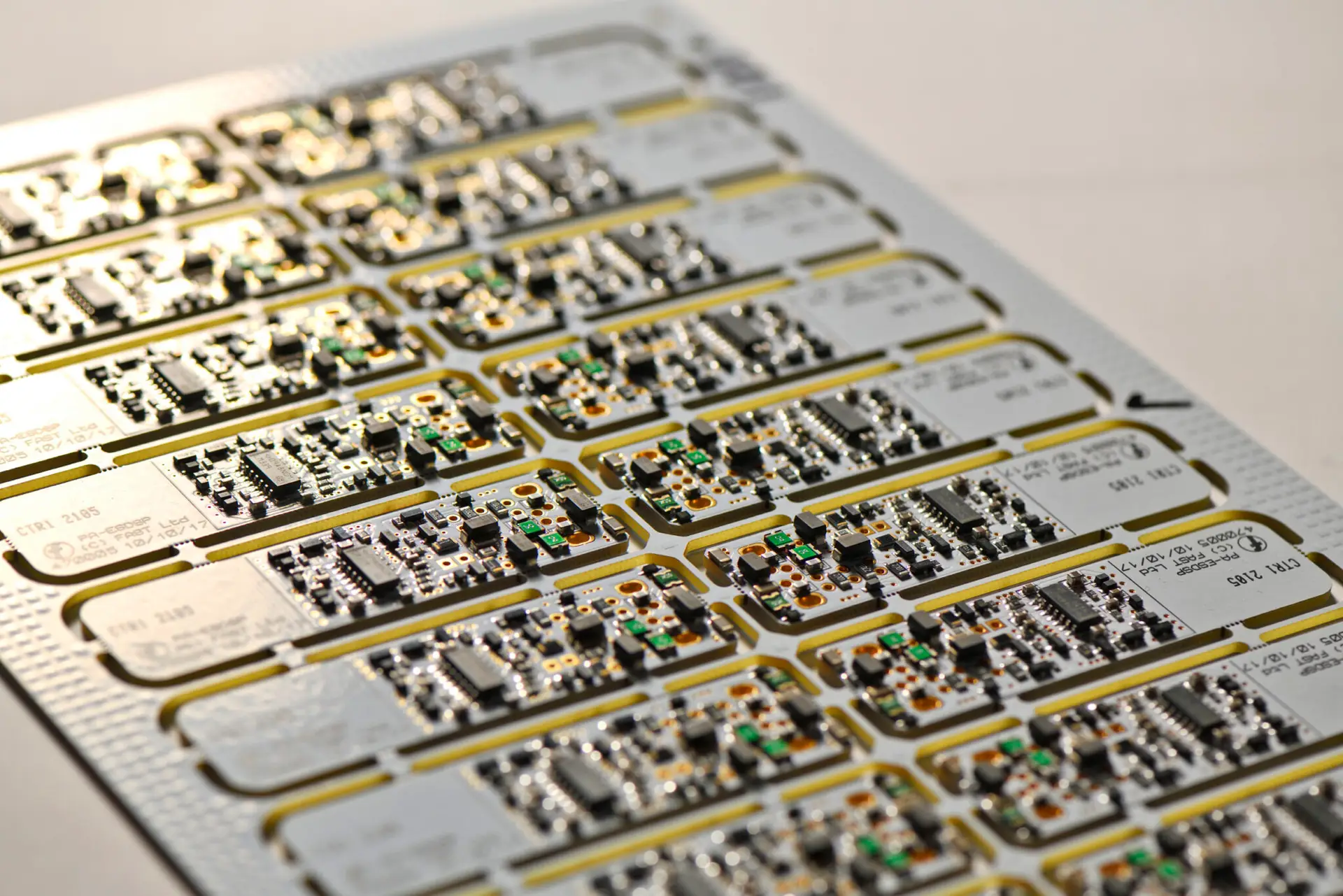
Advances such as surface mount technology and equipment that can pick and place tiny components with great precision help pack more processing power into a tighter space. These are normal in advanced electronics manufacturing. But there’s a delicate cost-benefit balance between further miniaturisation and more manufacturing complexity.
Perhaps emerging technologies such as photonic chips and quantum computing may offer opportunities to produce more processing power from a smaller device. In the meantime it’s a case of finding the optimal balance between size, performance, reliability, cost, and feasibility.
Interested in learning more about modern electronics manufacturing for high reliability markets?